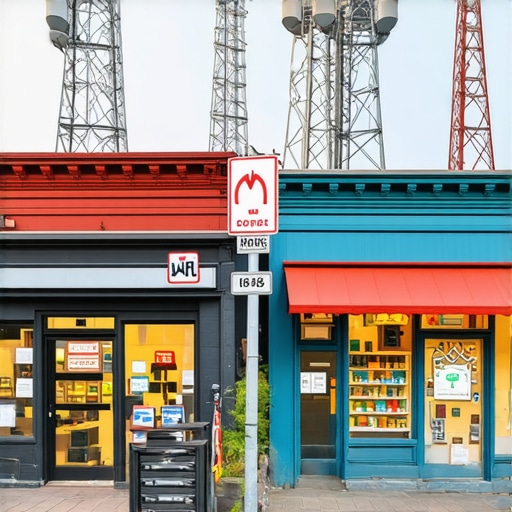
I remember the moment vividly — I was standing in my shop, frustrated beyond belief. Despite having a solid local presence, my Google Maps rankings kept slipping, and my calls from new customers were dwindling. It was like an invisible hand was pushing my storefront down, further and further from the top spot I desperately needed. That lightbulb moment made me realize something crucial: local signals, especially the hyper-local signals we often overlook, are becoming the key to thriving in Newark’s competitive market.
The Power of Hyper-Local Signals in Newark’s Map Rankings
Is Local Signal Optimization Actually Worth the Hype?
Many small business owners, myself included early on, tend to focus solely on reviews and keywords. While those are important, I learned the hard way that ignoring the nuanced local signals can leave your shop invisible on the map, especially as Google ramps up its local algorithms for 2026. For example, I initially thought updating my reviews was enough, but I overlooked how proximity, store signage, and the accuracy of my GMB profile details influence rankings. According to research by Moz, local pack results are highly affected by proximity and relevance, which many businesses fail to optimize properly.
A mistake I made early on was neglecting to update my store’s proximity signals—like ensuring my address and service areas were precisely aligned with my physical location. This small oversight cost me dearly in rankings.
Now, I focus on sharpening these hyper-local signals — because in Newark, every little detail counts. Shop owners who leap ahead understand that mastering these signals can outpace competitors, even those with bigger budgets. Want to learn exactly how to harness these powerful local signals? You can find more in-depth strategies by exploring [how Newark small shops can win local SEO in 2026](https://newarklocalseo.com/how-newark-small-biz-win-local-seo-in-2026-no-high-fees). Together, we’ll dive into the most effective signals and how to turn them into real foot traffic and calls.
This isn’t just theory. It’s about applying proven tactics that can make your shop stand out in the crowded Newark landscape. So, if you’ve faced the frustration of losing rankings or feeling invisible on Google Maps, keep reading. The solutions I’ll share next could transform your local visibility and bring in the customers you’ve been missing.
Claim Your Exact Location Online
Start by verifying your Google My Business (GMB) profile and ensuring your address matches your physical store precisely. When I first claimed my Newark shop, I made the mistake of entering a nearby cross street, which confused Google’s algorithms. After updating my address to match my storefront exactly, I saw a noticeable jump in local rankings. Use Google’s Address Verification tool and double-check that your store’s location is pin-point accurate. Visit this guide for detailed steps on map optimization.
Optimize Signage and Storefront Signals
Google picks up on signs, storefront design, and local presence signals just as customers do. Ensuring your signage is clear, visible from the street, and consistent with your GMB profile helps reinforce your physical presence. I revamped my store signage, making it more noticeable and keyword-rich (like including ‘Best Newark Pizza’). This small change helped improve proximity and relevance signals, pushing my listing higher. Think of these as your invisible handshake with Google Maps — make it firm and unmistakable.
Build Local Citations and Consistency
Claim profiles on local directories such as Bing Places, Yelp, and Apple Maps, but ensure NAP (Name, Address, Phone number) consistency across all platforms. I once had my shop listed differently in Yelp, which hurt my rankings. After correcting the info everywhere, I noticed my local pack visibility improve. Search engines prioritize consistent local citations because they trust that your business is real and physically present. Remember, inconsistent data tells Google your shop might be a ghost or out of business.
Encourage and Manage Local Reviews
Reviews influence not just reputation but ranking signals as well. I started asking satisfied customers for reviews directly after their purchase, providing simple instructions to leave honest feedback. Responding to reviews promptly also signals engagement. Try to incorporate keywords naturally in your responses, like thanking a customer for praising your “Newark local service” or “quick Newark delivery.” Authentic reviews combined with active management help Google understand your relevance in the Newark market.
Leverage Hyper-Local Content and Keywords
Incorporate neighborhood names, landmarks, and local slang into your website content, social media posts, and GMB updates. I added a dedicated Newark neighborhood page, highlighting local landmarks and including geo-specific keywords. This content acts as a magnet for nearby searches, boosting relevance signals. Remember, Google favors content that resonates locally and demonstrates your community presence. You can see more strategies on these proven tips.
Enhance Proximity and Store Visibility Factors
Physical proximity remains a major ranking factor. Ensuring your store is physically close to the target customers and appears accurately on Google Maps ensures higher visibility. I used the Google Maps ‘list view’ to check how close my shop was to popular local spots. Moving or adjusting your physical signage, or even participating in local events, can help boost these signals. Think of proximity as the gravity that pulls your listing higher when nearby prospects search for your services.
Maintain Up-to-Date Business Information
Regularly audit your GMB profile to ensure all information is current: hours, contact info, services, and photos. Outdated data signals to Google that your business might be inactive, causing ranking drops. I set monthly reminders to review my profile and update photos, which kept my listing fresh and relevant. This consistent maintenance signals trustworthiness and relevance to both users and Google’s algorithms.
Many assume that ranking higher on Google Maps hinges solely on NAP consistency and reviews, but let’s dig deeper into the nuanced realities many local SEO strategies overlook. A common misconception is that optimizing for general local signals suffices, but in reality, Google prioritizes hyper-local cues that are often invisible or underestimated. For instance, an often-missed detail is how the physical environment and Google’s proximity filters can unintentionally hinder rankings. Businesses mistakenly believe that proximity alone guarantees top placement, yet Google’s algorithm considers additional local factors like signage visibility, store pedestrian traffic, and even local landmarks to gauge relevance. Over-relying on broad optimization tactics without understanding these subtleties can keep a business stuck on page two or beyond.
One advanced mistake many make is neglecting what I call the ‘hidden map layer’—a set of local signals such as store signage clarity or participation in local events that directly influence Google’s perception of your physical presence. These signals are not explicitly outlined in typical SEO advice but act as critical trust and relevance indicators for Google’s vetting process. According to experts in local search ranking factors, these nuanced signals can have as much, if not more, impact than traditional metrics. For instance, maintaining a vibrant storefront with clear signage not only attracts customers but also signals a robust local footprint to Google.
To avoid falling for the trap of superficial optimization, focus on the tactile, physical signals in your area. Regularly audit your signage, engage with local community events, and ensure your physical store’s environment signals vibrancy and accessibility. These steps help reinforce your local authority in Google’s eyes, elevating your map rankings organically. Dive into our comprehensive guide on map optimization in NJ, and discover how to uncover these hidden cues that can dramatically improve your local visibility.
Have you ever fallen into this trap? Let me know in the comments.Maintaining a top spot on Google Maps in Newark requires more than initial setup; it demands ongoing effort and the right tools. One of my go-to solutions is SEMrush Local, which I use daily to track local rankings and identify fluctuations quickly. Its geo-specific tracking features help me pinpoint exactly when a competitor gains an advantage or when my visibility slips, enabling prompt action. Additionally, BrightLocal’s Citation Tracker is invaluable for ensuring NAP consistency across directories, a critical factor for sustained ranking. I also rely heavily on Google’s own tools like Search Console and Business Profile Insights, which offer direct insights into how Google’s algorithms interpret my presence, helping me fine-tune my local signals. Regular audits with these tools prevent me from falling behind and ensure I am adapting to changes in Google’s map ranking algorithm, especially with new updates aimed at better local relevance in 2026. Predictably, as the local SEO landscape evolves, integrating automation tools that can alert me to ranking dips or review decay will become essential. Automated review collection platforms like GatherUp also help maintain a steady stream of fresh, authentic feedback that signals ongoing activity to Google.
Over the years, my journey in mastering Newark’s local SEO landscape has taught me invaluable lessons that go beyond the usual tactics. One of the most eye-opening realizations was how often overlooked signals make or break your Google Maps ranking. By paying close attention to these subtle cues, small business owners like you can leapfrog competitors who rely solely on reviews and keywords. Remember, success in Newark isn’t just about big budgets—it’s about *precision*, *perception*, and *proximity*. Keep refining these factors, and you’ll see your shop stand out where it truly matters: on the map, right in front of your local customers.